Case Study · Bell Media / CTV News
Redesigning the Local tab experience to surface newscasts and video content that was buried, cutting task time by 68% and pushing usability scores from failing to near-perfect.
01 · Problem
CTV News covers 15+ local stations, and local newscasts are one of the most-watched content types on the platform. The Local tab held it all: stories, newscasts, and featured video. But the tab was split across sections that required users to switch views before finding anything.
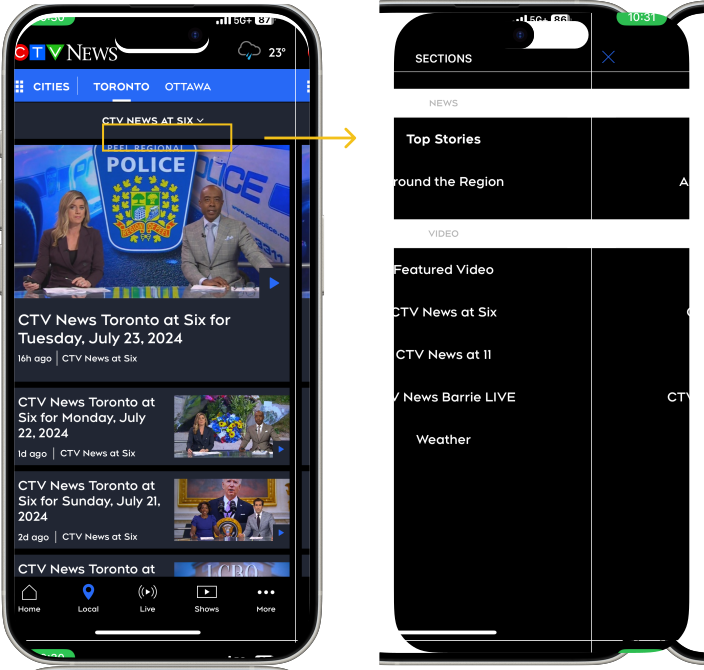
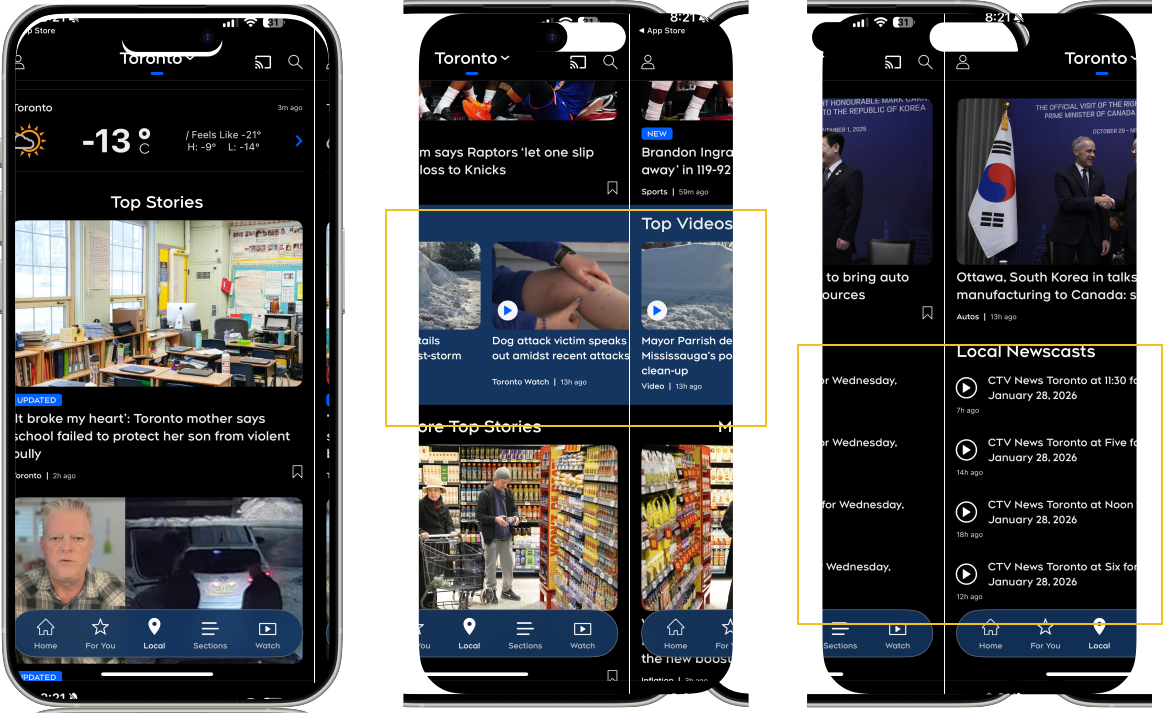
I ran usability tests on the old flow with 10 participants, asking each to find CTV News Toronto at Six from the home screen. Most couldn't. The content existed, but the section switch needed to reach it was easy to miss entirely.
Before: local newscasts and featured video were hidden behind section switching in the Local tab
Baseline usability study
02 · Landscape
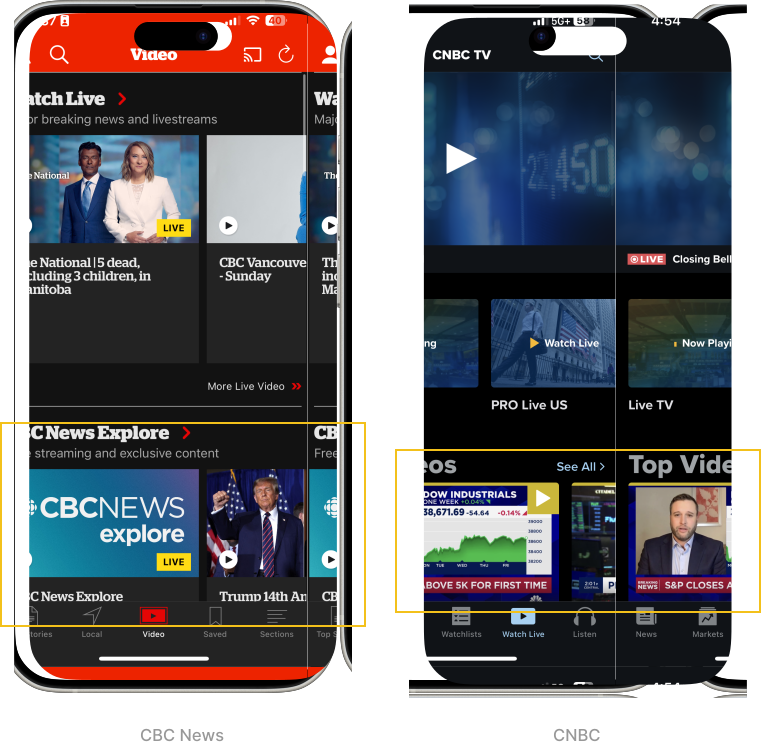
Before wireframing anything, I reviewed how leading news and video apps surfaced video content. A few patterns came up consistently: video was treated as its own content type, not mixed into a general feed. It was usually given a dedicated, labeled module with a distinct card pattern that made it easy to identify on scan. CBC News and CNBC were the clearest examples of this, and both informed how I approached the Local tab structure.
CBC News
CNBC
03 · Exploration
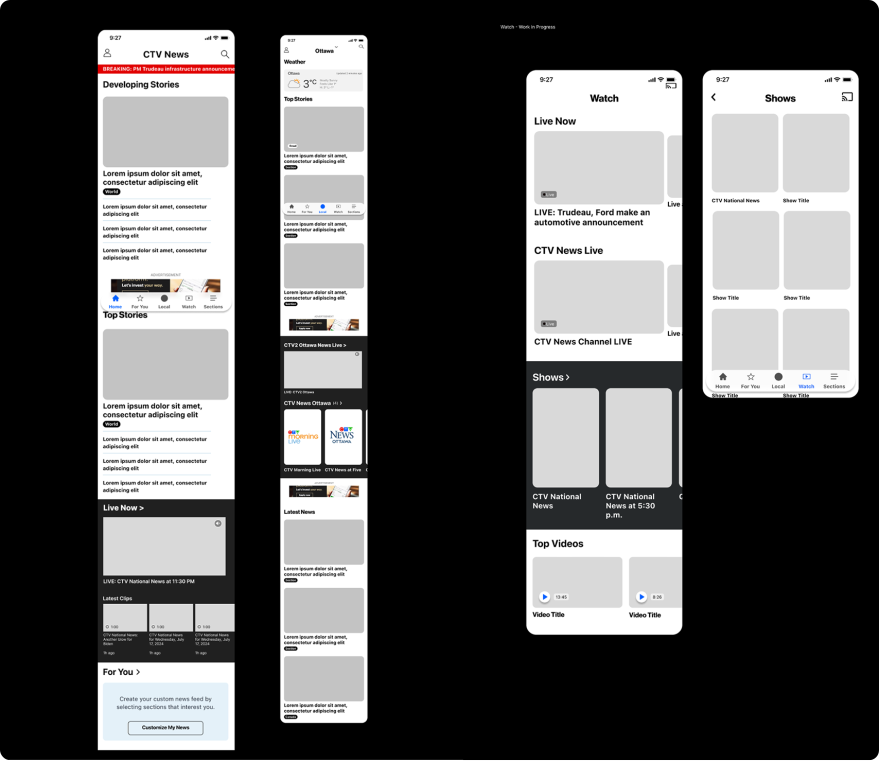
I wireframed several structural models before landing on a three-section feed. The goal was simple: replace section-switching with a single scrollable path.
Early wireframes exploring the Local tab structure and scalable content patterns across tabs
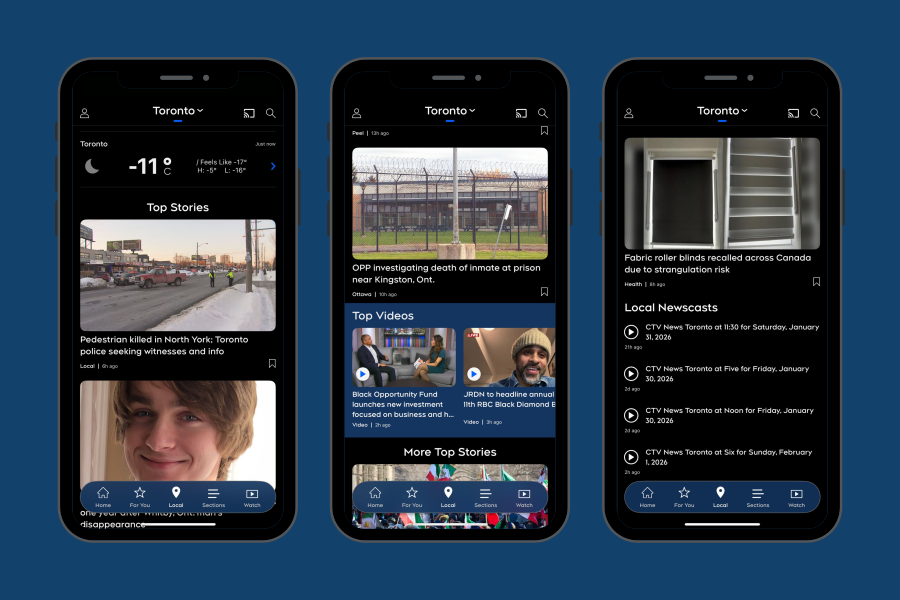
Leading article cards from the user's local market. Familiar entry point, matching the existing mental model.
A horizontal video rail with the most-watched and most-recent clips from that market. Visually distinct from article cards.
Full newscasts from that city's CTV station: noon, evening, and late news. Always visible, no switching required.
04 · Constraints
In weekly reviews with editorial, product, and engineering, we aligned on the Local tab's content set: Top Stories, Top Videos, and Local Newscasts. Developing Stories was scoped out to keep the launch tight.
Two constraints shaped the work. The Home tab was already in development, so new patterns had to reuse existing components to stay consistent. The Watch tab was next in the queue, so I designed with scalability in mind rather than solving Local in isolation.
05 · Refinements
The Local tab moved from a section-switched experience to one unified, scannable feed.
Before: local newscasts and featured video required navigating into a hidden sections drawer
After: Local tab organized into one scrollable feed. Top Stories, Top Videos, and Local Newscasts always visible.
06 · Results
After launch, we re-ran the same usability study. Every metric moved.
Usability benchmark summary, before and after the redesign
The core finding: the content wasn't broken; the structure around it was. Surfacing what users wanted in the natural path of the feed was the fix. No new features, no added complexity. Just clearer hierarchy.
07 · Reflections
This project reinforced how much structure drives outcomes. When content is buried, people don't miss it because they can't find it. They miss it because the interface never made it visible in the first place.
The patterns we established, including the Top Videos module and city-switching model, are now reused across other Bell Media products. That consistency reduces future design and engineering work.