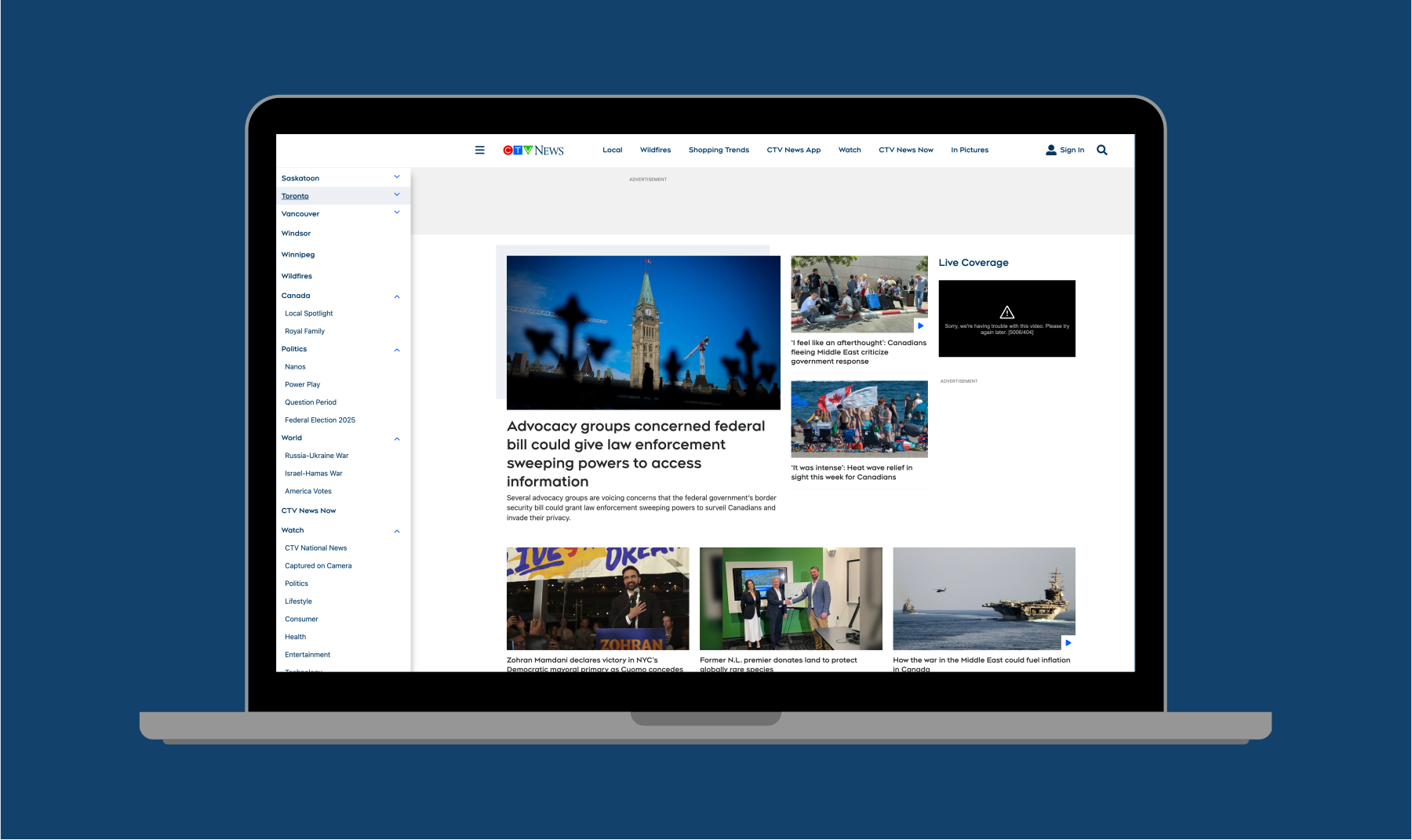
Case Study · Bell Media / CTV News
Web Navigation & Menu Structure
Restructuring a bloated 25+ item news dropdown into a clear, grouped hierarchy, using card sorting and IA research to build a navigation system readers could actually use.
Case Study · Bell Media / CTV News
Restructuring a bloated 25+ item news dropdown into a clear, grouped hierarchy, using card sorting and IA research to build a navigation system readers could actually use.
01 · Problem
This came up during a broader CTVNews.ca redesign that also included a CMS migration. The News dropdown had grown to 25+ items with no grouping, no hierarchy, and no logic. Users had to read the full list every time.
Previous testing showed reaching a specific page inside a main topic averaged 75 seconds, with participants hunting through the flat list or backtracking to find it.
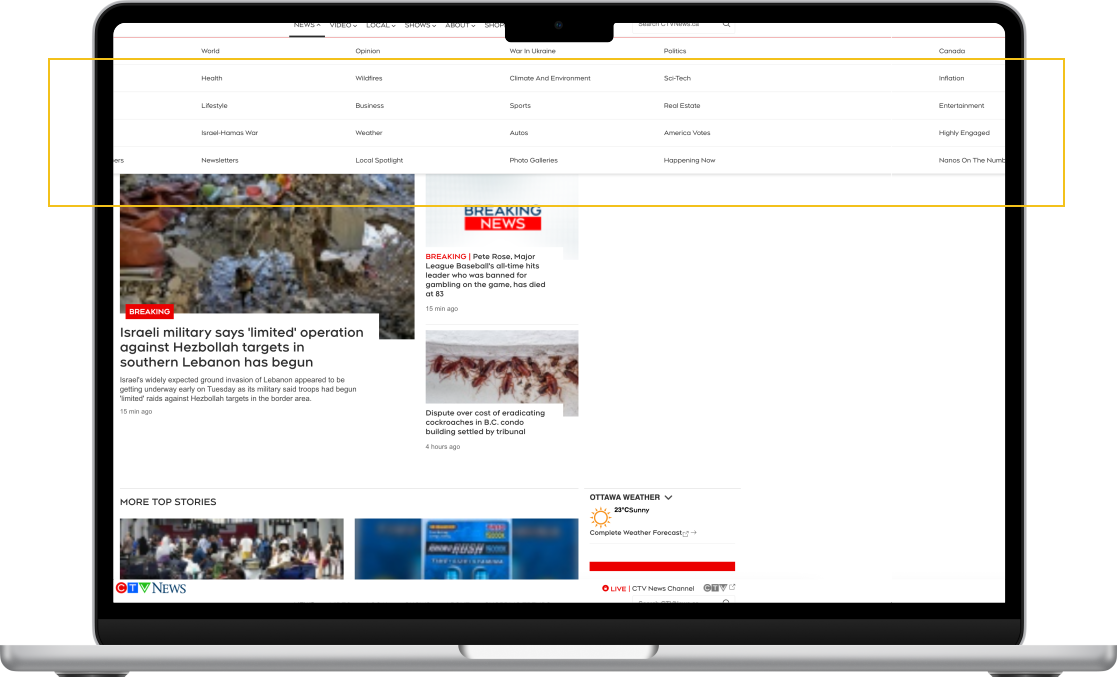
CTVNews.ca homepage, showing the News dropdown as it existed before the redesign
The problem
02 · Alignment
When the grouping conversations started, suggestions were coming from personal preference rather than reader logic. I flagged it to the PM and proposed taking the question out of the room. We ran a card sort with real readers and came back with findings to anchor the next discussion.
03 · Research
I ran a two-phase study to understand how readers actually grouped content.
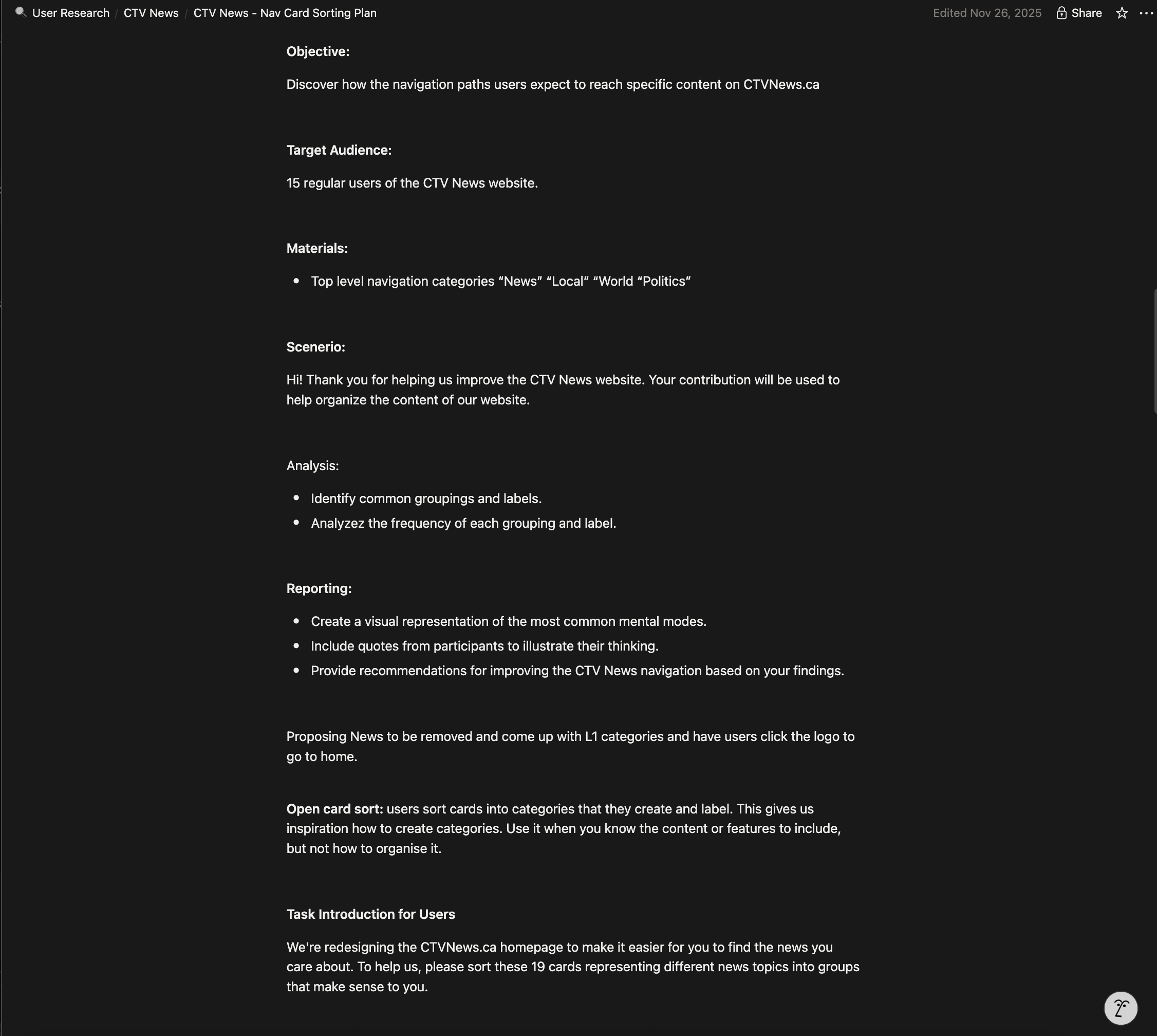
Study plan: open + closed card sorting exercise with 15 regular CTV News readers
Participants grouped all navigation items however felt natural, then named each group themselves. No categories were provided. This surfaced unbiased mental models and reader-facing language the team hadn't considered.
Participants sorted the same cards into pre-defined categories based on patterns from the open sort. This validated which groupings had consensus and where edge cases needed a judgment call.
04 · Findings
The card sort surfaced clear consensus groups that became the foundation for the new IA. Participants consistently clustered content by topic and theme, not by the internal org structure the existing nav reflected.
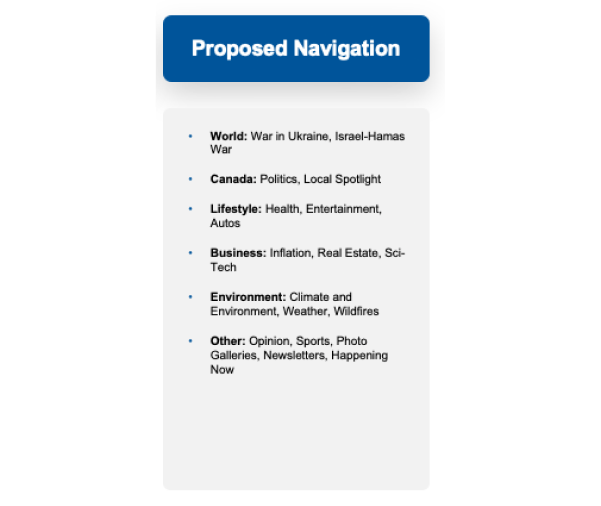
The structured navigation I brought into the stakeholder meeting, built from the card sort groups.
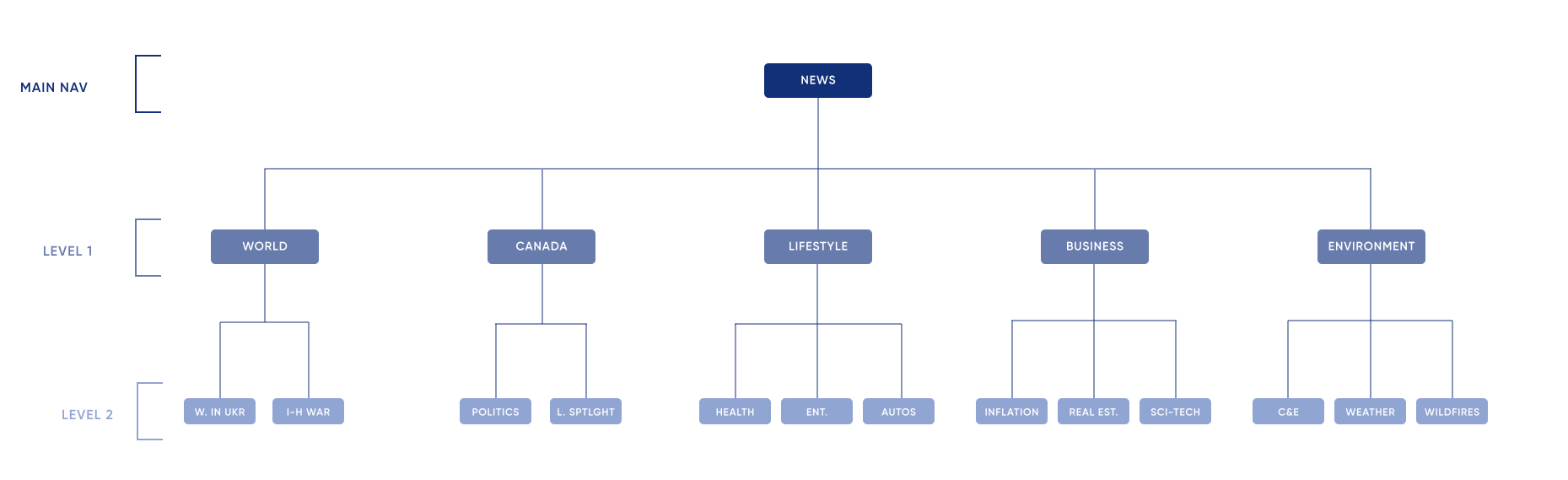
I brought the card sort structure into a meeting with product and editorial to work out priority. The groups held, but the top nav could not carry all of them once promotional slots were accounted for, so we introduced a hamburger menu to hold the rest. From there I built the formal IA defining Main Nav, L1 sections within the dropdown, and L2 destination pages. Every item had to belong somewhere meaningful.
05 · Information Architecture
The table below breaks down how Main Nav, L1, and L2 map to what readers see, from the top-level tabs down to individual destination pages.
| Level | Role | Example |
|---|---|---|
| Main Nav | Top-level navigation tabs visible across the site. The primary entry points readers see before opening any dropdown. | News · Video · Shows · Local |
| L1 | Category sections within a dropdown. Grouped by topic, visually separated, based on card sort clusters. | World · Canada · Lifestyle · Business |
| L2 | Destination pages beneath each L1 section. Individual topics using reader-facing language, not internal team labels. | Russia-Ukraine War · Federal Politics · Real Estate |
06 · Solution
The flat list was replaced with grouped sections using the card-sort-derived structure. Readers could scan to the right cluster and navigate directly, no more reading every item top to bottom.
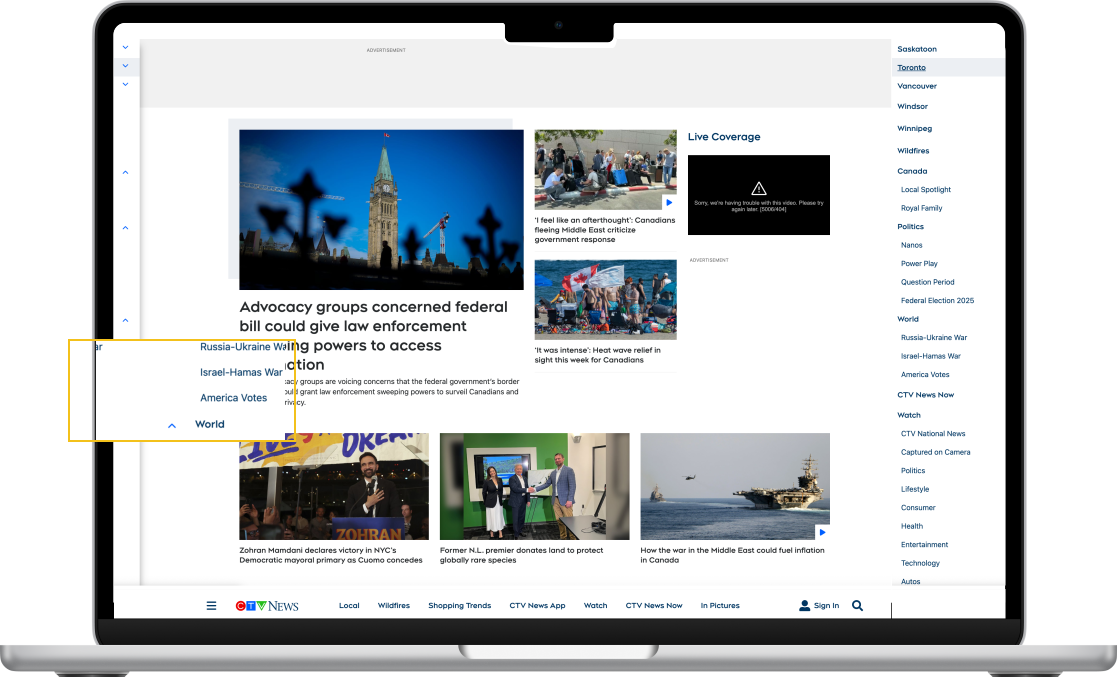
The News dropdown rebuilt into labeled L2 sections based on card sort clusters. Readers scan to the right group, not through every item.
Labels matched the language from the open card sort, matching how readers described content rather than internal team labels.
Regional pages grouped under a "Local" L2 header instead of listed individually at the top-level, immediately reducing visual noise.
Business content that was split across two places in the old nav merged into one group, which is how nearly every card sort participant had organized it naturally.
07 · Solution
Sub-topics that were previously invisible now surface directly beneath their parent section. Readers no longer need to know they exist in order to find them.
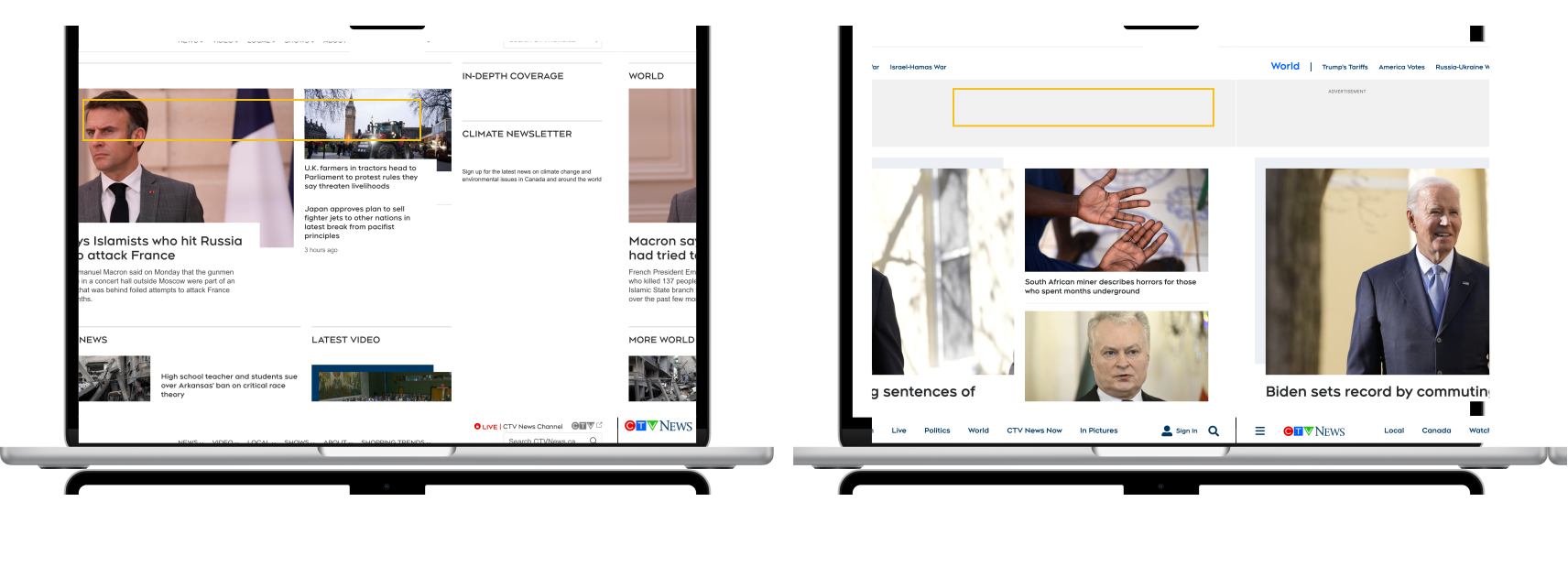
Before: World showed no sub-topics in the nav. Categories like Russia-Ukraine War were buried with no visible entry point.
After: Related topics now sit directly beneath World, visible at a glance. Readers find what they need without already knowing where to look.
08 · Results
After launch I re-ran the same benchmark on web and mobile web. Reaching a specific page inside a main topic dropped to 30 seconds. Participants scanned to the right group and went straight in rather than reading the full list or backtracking.
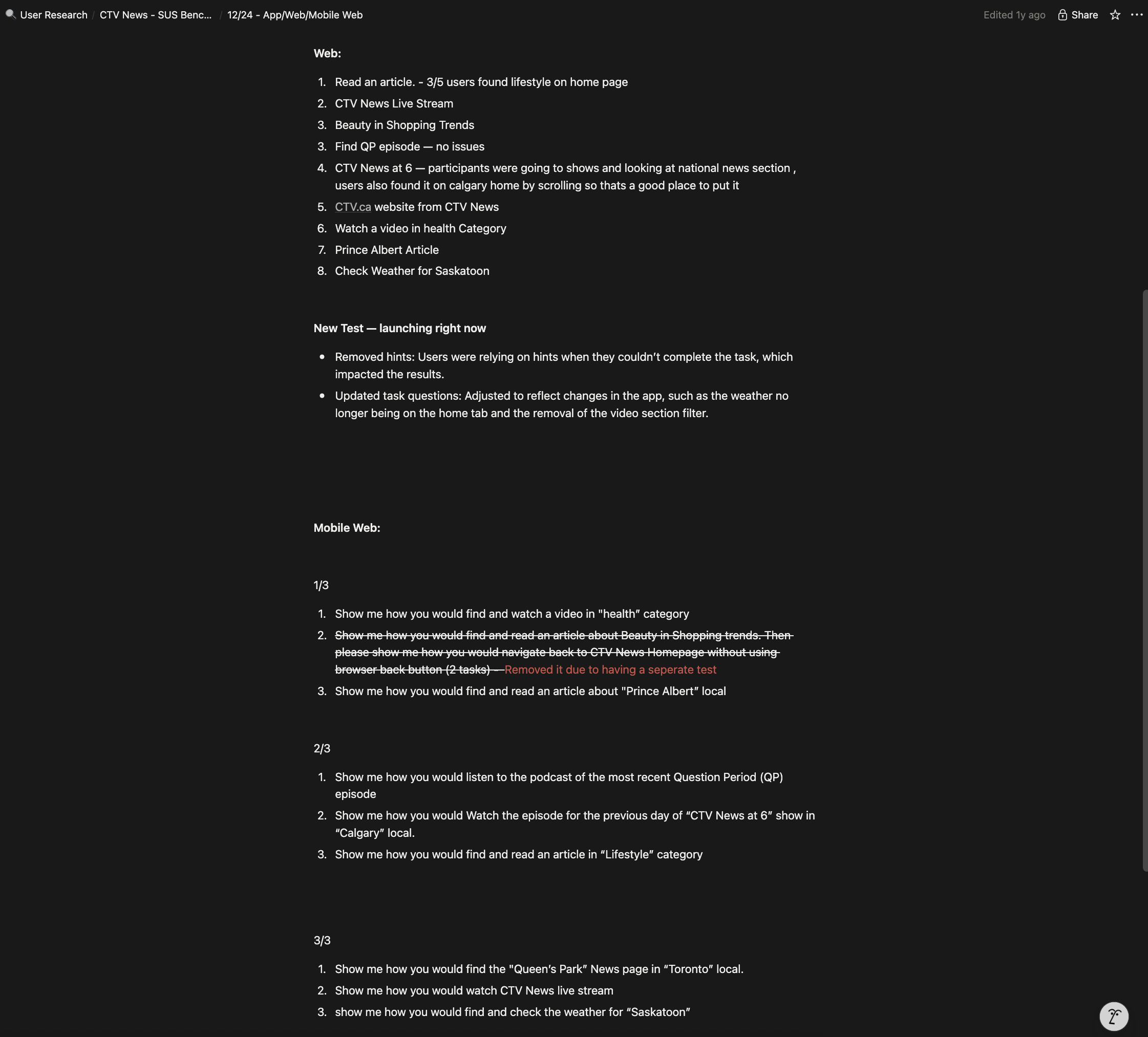
Benchmarking · Q1 2025
09 · Key Takeaways
Grouping suggestions were coming from personal preference until the card sort gave the team something to point at instead. Two phases with the same 15 readers turned a subjective argument into a structure nobody had to defend from instinct.
The open sort surfaced the words readers actually used for categories, which were not the internal labels the team had been defending. Naming sections the way readers name them cost nothing and was still the single biggest legibility gain.
Destination pages like Russia-Ukraine War existed before the redesign, but nothing in the nav pointed to them. Surfacing them beneath their parent section did not require new content, only a structure that let people find what was already there.