.png)
CTV News is Canada’s most-watched news organization, with national and local coverage across the country. Local newscasts are a core watch use case, but in the existing app they were easy to miss and often required a non-obvious path.
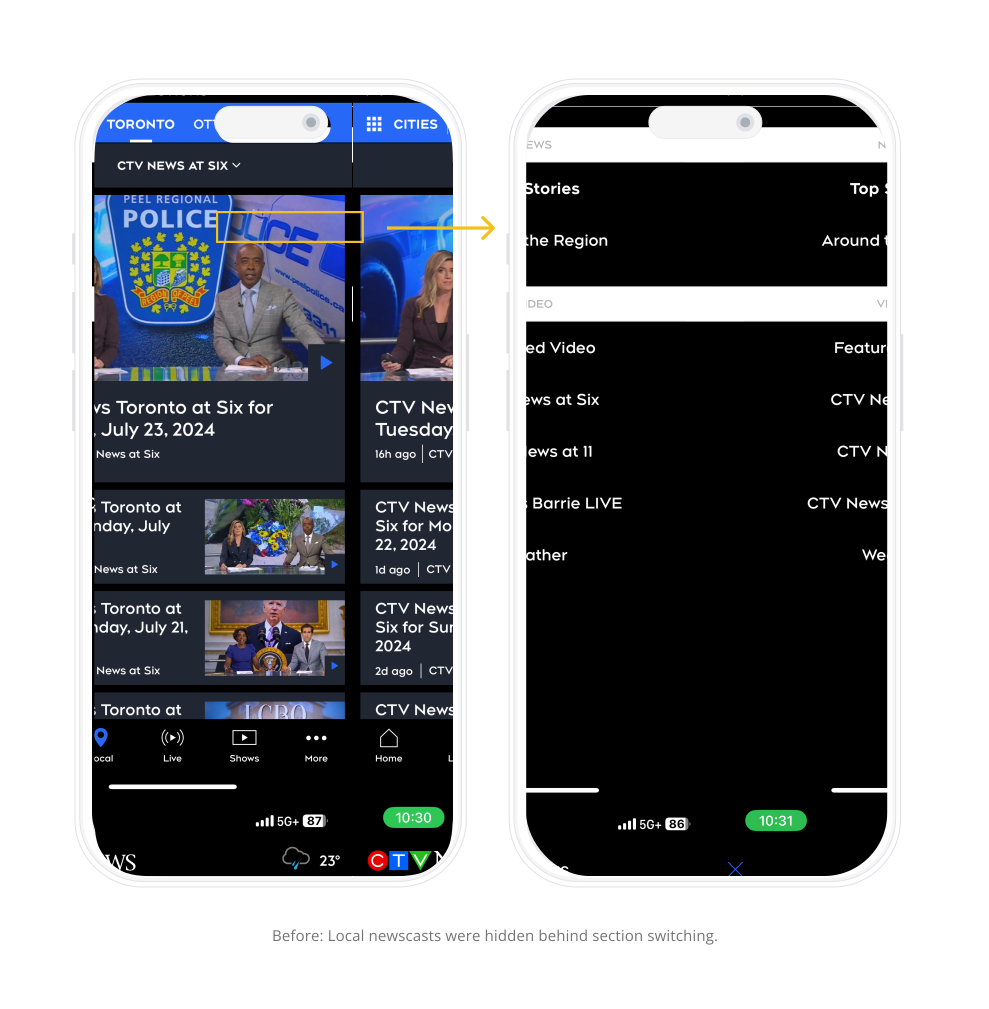
My focus was on understanding how users scan for local video, validating those behaviors through research, and changing the Local experience so newscasts were visible by default.
After conducting usability tests, I studied how leading news apps structure video and surface local coverage.
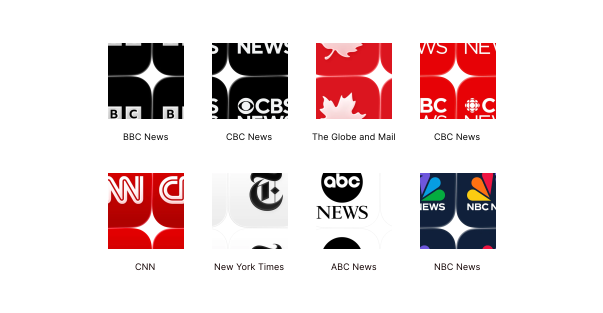
I packaged these findings into a short review and aligned with product, editorial, and engineering on direction and feasibility before moving into concepts and validation.
Before moving into high-fidelity UI, I sketched and wireframed multiple directions for the Local experience, then turned the strongest option into clickable prototypes to validate the flow end-to-end.

Alongside design reviews with product and engineering, I partnered with accessibility specialists to review key journeys and interaction patterns.
To improve clarity and accessibility, we introduced labeled swimlanes and consistent affordances (chevrons/arrows) so it’s obvious what’s tappable and what each module contains, including shows and local newscasts.
Once stakeholders were aligned and the structure held up, we moved into visual design and ran the next round of testing.
Based on team feedback and testing, I iterated on the Local experience and how video content was organized and labeled.
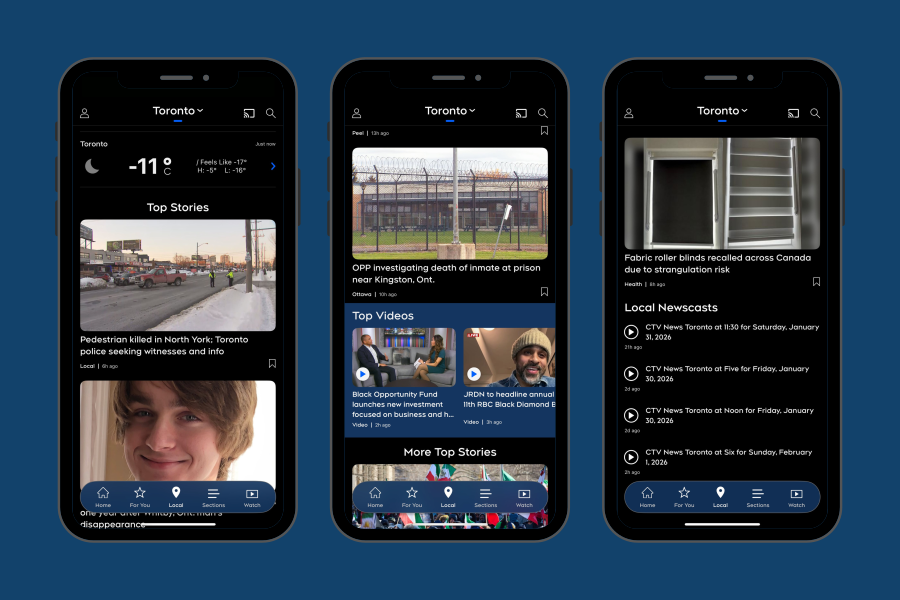
Our goal was to reduce time-to-video, make local newscasts visible by default, and improve scanning with clear module structure.
.svg)
Top Stories, Top Videos, and Local Newscasts now live together in one feed. Newscasts are visible by default, and the module structure makes it easier to scan and pick a video quickly.
After launching the updated Local experience, I ran a SUS usability benchmarking study comparing the old newscast path to the redesigned Local Hub using the same tasks and time-on-task measures.

This project reinforced how much structure drives outcomes in a news app. When local programming is buried, people don’t miss it because they aren’t capable. They miss it because the interface doesn’t make it visible at the moment they’re scanning for it.
The module patterns we established, including Top Videos and the city-switching model, are now reusable across other Bell Media experiences. That consistency reduces future design and engineering effort and helps teams ship updates faster without re-teaching users how to navigate.